The Seam on a Cricket Ball Is More Than a Join
A cricket ball seam gives fingers a clear reference for grip and release. Learn how its raised stitching works and what to adjust when it feels awkward.
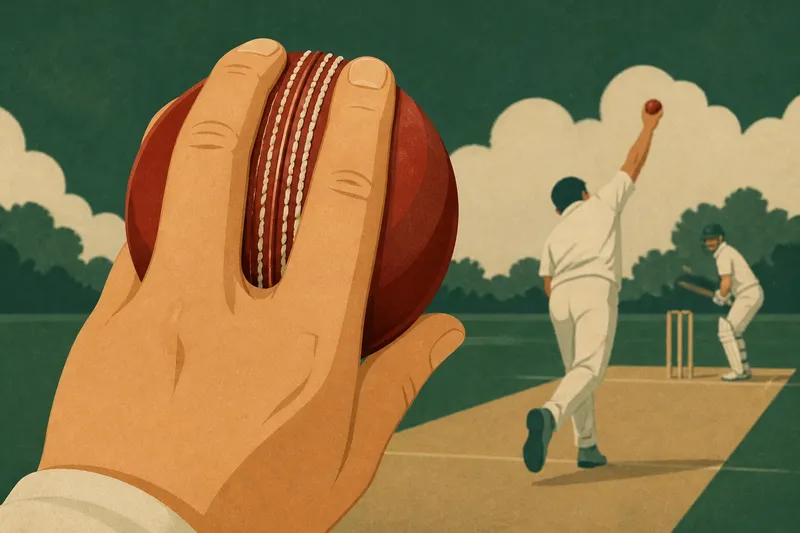
The common mistake with a cricket ball seam is treating it as decoration: a ridge to point toward the batter while the fingers do the real work. That can leave a bowler gripping too tightly or releasing without a consistent reference, making the ball feel awkward before it has even left the hand.
The seam is a raised line of stitching joining the ball’s leather sections. It gives the fingers a tactile edge to locate, and its position can influence how the ball leaves the hand. That is a useful advantage, not a hidden mechanism that makes every delivery move on command.
What is the raised seam made to do?
A cricket ball’s outer cover is made from leather pieces joined by prominent stitching. The thread sits above the surface, creating a ridge that can be felt through the fingers. The precise construction and feel vary between balls, but the seam is intended to remain a distinct feature rather than a flush line.
That raised profile matters because a bowler needs a repeatable way to place the index and middle fingers. Smooth leather offers little tactile information; the seam gives those fingers a line to find. It can also help the bowler sense whether the ball is sitting squarely in the hand or has shifted during the approach.
The seam is not a lever that steers the ball by itself. Its usefulness depends on how the fingers contact it, how the wrist and hand move, and what kind of delivery the bowler is attempting. Treat it as a reference point, not a promise of swing, seam movement or spin.
Why does the seam help with grip and release?
For many pace bowlers, the index and middle fingers rest on either side of the seam, with the thumb supporting the ball underneath. The seam helps establish a familiar spacing and angle. A bowler may hold it upright for a conventional stock delivery, while making small changes to finger placement for another variation.
At release, the fingers leave the ball in sequence rather than acting as a clamp that opens all at once. The seam offers a final point of contact, helping the bowler repeat the feel of that release. If one finger bears much more pressure than the other, the ball may come out with an unintended tilt or wobble.
Spin bowlers use the seam differently according to their grip and technique. Some use it as a guide for finger placement; others rely more on the ball’s surface and the way their fingers impart rotation. In either case, the ridge can help locate the ball consistently, but it does not replace control of the fingers.
Keep the grip secure enough to control the ball, but loose enough for the fingers to release it.
What goes wrong when the seam feels awkward?
The fingers slide off the ridge. This can happen when the fingers sit too far across the seam, when the ball is damp or slick, or when the grip is so tight that the fingertips cannot settle naturally. Try placing the index and middle fingers closer to the ridge and easing pressure until the hand can hold the ball without squeezing.
The ball wobbles out of the hand. An inconsistent finger spread or uneven pressure can make the seam leave at an angle. Check whether both fingers contact the ball in a similar, comfortable way, then rehearse a relaxed release at low effort. Do not try to correct a wobble by abruptly forcing the wrist into position; that often changes the whole action instead of addressing the grip.
The seam feels too sharp or uncomfortable. New or differently constructed balls can feel more pronounced under the fingertips. A bowler may be pressing too hard against the ridge, or the seam may simply not suit the current finger spacing. Shift the fingers slightly and test a comfortable hold before increasing bowling effort.
The grip changes from one ball to another. Seam height, stitching and leather condition are not identical across every ball. Find the seam by touch before starting the run-up, and make a small adjustment to finger placement rather than expecting every ball to sit exactly the same way.
How can you adjust the grip without rebuilding the action?
Start with the ball held still. Find the seam with the index and middle fingers, then check whether the thumb supports the underside without carrying the whole load. The hand should feel balanced enough that the ball does not need to be pinched between the fingertips.
Next, make a few gentle releases from a stationary position. Notice whether the seam leaves the hand in a consistent orientation and whether the fingertips finish comfortably. If the ball slips, move the fingers nearer the ridge or reduce the amount of surface they cover; if the hand feels cramped, widen or narrow their spacing slightly.
Only change one detail at a time. Moving the seam, altering finger pressure and changing wrist position together makes it difficult to tell which adjustment helped. Once the hold feels repeatable at low effort, carry that same grip into an ordinary bowling action rather than adding force to compensate for uncertainty.
Say a beginner’s middle finger keeps sliding toward the smooth leather during gentle practice. They could shift that finger closer to the ridge while leaving the index finger and wrist position alone, then check whether the ball feels steadier at release. The useful result would be a more familiar contact point, not a claim that the ball must swing.
Can the seam tell you what kind of delivery to bowl?
The seam’s orientation can be part of a bowler’s plan, but hand position and release matter more than simply pointing the ridge in a chosen direction. A pace bowler might use an upright seam as a repeatable cue, while another delivery calls for a different finger arrangement or release. The seam helps organize the grip; it does not decide the outcome after the ball is airborne.
For a batter or viewer, the visible seam can offer a clue about the bowler’s intended release, though it is not a complete reading of the delivery. The angle may change quickly, and the camera or viewing position can hide details. Treat it as one piece of information alongside the bowler’s action and the ball’s flight.
Use the ball and practice conditions specified by the competition or coach, since construction and handling guidance can differ by product and local rules.
Does seam wear change how the ball feels?
Wear can soften or flatten the raised stitching, while scuffs and changes to the leather can alter how the ball feels in the hand. A worn seam may be harder to locate by touch, especially for a bowler who depends on a precise finger position. Before changing technique, check whether the ball itself has changed.
Do not pick at the stitching or try to reshape the seam. Keep the ball in sound condition according to its intended use, and tell a coach or official if damage affects handling or appears to violate the competition’s requirements. A ball that feels different is a reason to reassess the grip, not to improvise repairs.
Which seam questions come up most often?
Should the fingers sit directly on the seam?
Many pace bowlers place the index and middle fingers along opposite sides of the seam, but exact placement varies with hand size and delivery. The useful position is one that gives a repeatable hold and comfortable release.
Does a raised seam make the ball swing?
The seam can contribute to how a ball behaves in flight, but its presence alone does not produce a particular movement. Release, orientation, ball condition and the surrounding conditions all matter.
Why does a new ball feel different from an older one?
The stitching and leather may have a different texture or firmness, and wear can change the ridge’s feel. Recheck finger placement on the ball in hand instead of assuming the same grip will feel identical.
Can a bowler use the seam to improve spin?
A spin bowler may use the ridge as a reference for finger placement, but spin comes from the bowler’s release and finger action. The seam can help locate the ball; it cannot supply the rotation by itself.
The cricket ball seam is useful precisely because it is small and easy to feel. When the grip becomes uncertain, locate the ridge, adjust one finger position, and return to a relaxed release; that is usually a better starting point than squeezing harder or asking the seam to do the bowler’s job.